
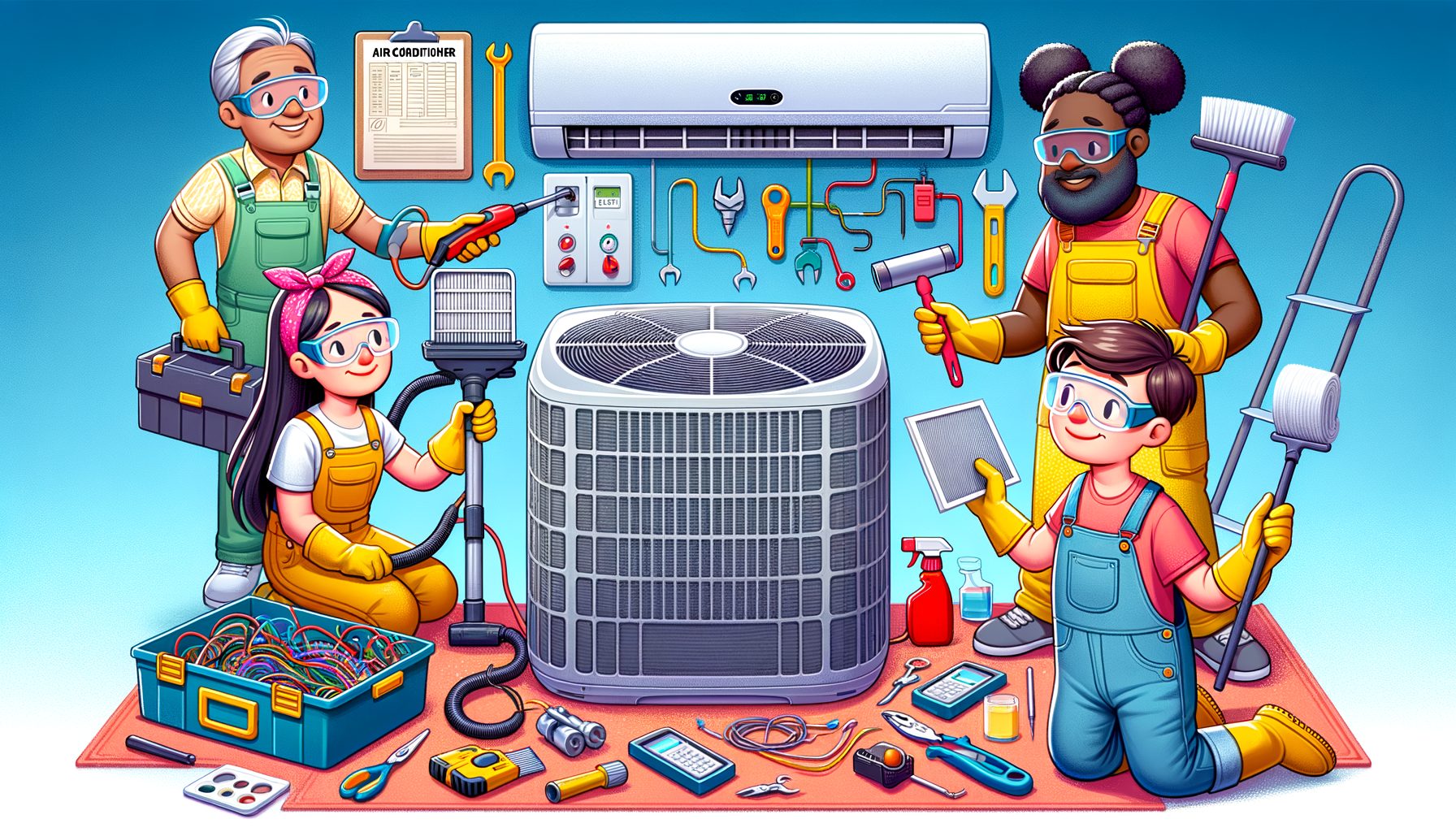
Stuffy rooms, creeping energy bills, stubborn allergies—sound familiar? Odds are, the cooling system has been ignored. Want fresher AC and cleaner air without overspending? A handful of easy habits can move the needle. In the guide below, you’ll pick up practical steps to freshen the AC, lift indoor air quality, and trim energy waste—no fancy tools or HVAC diploma required.
Why ACs Get Musty—and What That Does to Your Air and Bills
As warm, humid air gets pulled across a cold evaporator coil, it drags along dust, pet dander, skin flakes, and outdoor particles. Those don’t vanish; they clog filters, stick to coils, and collect in drain pans. Add moisture and you’ve built a cozy habitat for microbes and musty odors. Left alone, the buildup doesn’t just smell off—it chokes airflow, forces longer runtimes, and drives up energy use.
The usual suspect is a dirty or clogged filter. With restricted airflow, the system has to work harder, and the effort shows up on your utility bill. The U.S. Department of Energy notes that swapping a dirty filter can cut AC energy use by 5% to 15%—quick savings for a quick task. There’s also a health angle: weak filtration leaves fine particles (including PM2.5 from smoke and traffic) floating indoors, which can irritate lungs and aggravate asthma or allergies. When humidity joins the party, a poorly draining condensate line can leave standing water where mold flourishes.
Pay attention to smells—they’re warnings. Sour or musty notes often point to biological growth on the coil or in the drain pan. A “dirty sock” odor right after startup commonly signals microbial buildup on the evaporator coil. Catch a burning scent? It may be dust on electrical components after a long idle period and should clear quickly; if it lingers, shut the unit down and call a pro.
Even modern systems need routine care. High efficiency assumes clean coils and filters with unobstructed airflow. Hot, humid climates speed up problems because the unit runs longer and condenses more moisture. Dusty or polluted cities clog filters faster. In short, the environment sets your maintenance tempo. Light, regular attention prevents expensive repairs and keeps the air you breathe healthier.
Quick facts that matter
| Issue | Impact | Helpful Benchmark |
|---|---|---|
| Dirty air filter | 5–15% more energy use; poorer air quality | Check monthly; replace or clean when dirty |
| High indoor humidity | Mold growth, odors, discomfort | Keep 30–50% relative humidity |
| Coil fouling | Lower cooling capacity; longer runtimes | Inspect every season; clean as needed |
| Poor filtration | More PM2.5 and allergens indoors | Use the highest MERV filter your system supports |
The 10-Minute Monthly Routine: Filters, Vents, and Visual Checks
If you only tackle one habit, make it this routine. It’s quick, inexpensive, and prevents most air-quality and efficiency headaches.
1) Power safety. Turn off the system at the thermostat and, if you can, the breaker. That way, the fan won’t pull in dust during inspection, and you’ll be safer while removing panels or filters.
2) Filter check. Find the filter at the return grille, inside the indoor air handler, or in a slot near the blower compartment. Slide it out and hold it to the light. Little to no light coming through—or a gray, fuzzy look—means it’s time to replace (disposables) or wash (reusables). For disposables, match the airflow arrows to the original direction. For washable filters, rinse from the clean side toward the dirty side with lukewarm water, let it dry completely, then reinstall.
3) Pick the right filter. Aim for the highest MERV rating your system can handle without a pressure penalty. Many homes do well with MERV 11–13. If airflow drops after an upgrade, step down a notch or have a technician measure static pressure. Window and mini-split units with washable screens should be cleaned monthly—or more often during heavy use.
4) Vent hygiene. Vacuum dust from return grilles and supply vents. Dust on grilles ends up back in your lungs or your system. Clear furniture or curtains blocking vents to improve airflow and comfort.
5) Sniff test. Turn the system on and smell near a supply vent. Musty notes suggest moisture issues (inspect the drain). Sour or “dirty sock” odors hint at coil cleaning needs. A sharp, ozone-like scent may point to a problematic “purifier”—turn it off and reassess.
6) Humidity spot-check. Use a hygrometer or smart thermostat to keep indoor humidity between 30% and 50%. Readings that sit above 55% may indicate an oversized AC, a dirty coil, or the need for better moisture control. In humid climates, run bathroom and kitchen exhaust fans during and after showers or cooking.
7) Outdoor unit glance (central AC/heat pumps). Brush away leaves, lint, and grass clippings from condenser fins. Maintain at least 60 cm (2 feet) of clearance around the unit. Bent fins? Straighten gently with a fin comb or a blunt butter knife.
8) Condensate line check (central systems and some mini-splits). Locate the small PVC drain line by the indoor unit. If there’s a cleanout cap, open it and pour in a cup of white vinegar monthly to discourage algae. Water pooling or a tripping float switch means a likely clog—vacuum the outside outlet with a wet/dry vac.
9) Gasket and seal look-over (window units). Search for gaps around the unit that invite hot, humid outdoor air. Reseal with foam or weatherstripping to reduce condensation and improve efficiency.
10) Calendar it. Put a monthly reminder on your phone. Homes with pets, smokers, busy roads nearby, or hard-running systems benefit from checking every two weeks. Consistency wins over any single deep clean.
Deep Clean Like a Pro (Safely): Coils, Drains, and Outdoor Unit
When the quick checks don’t cut it, a careful deep clean can restore performance and freshen the air. Many tasks are DIY-friendly; others belong with a licensed HVAC technician.
Evaporator coil (indoor): The coil extracts heat and moisture. Dust plus moisture turns into sticky grime that blocks airflow and shelters microbes. If the coil is accessible, power the system down and remove the access panel. Use a soft brush or a no-rinse cleaner designed for indoor coils. Harsh chemicals should be skipped—they can corrode fins and leave residue that attracts more dirt. Spray evenly, let the foam do the work, and reassemble after it dries. Heavily matted coils or inaccessible setups deserve a professional cleaning; ask for before/after photos.
Condensate drain and pan: The pan under the coil should stay clean and draining. Spot slime or debris? Wipe with a microfiber cloth and a mild disinfectant. Pour white vinegar (avoid bleach, which can damage some materials) into the drain to discourage algae. If water backs up, a clog is likely—use a wet/dry vacuum on the outside outlet or have a pro clear it with the right tools.
Condenser coil (outdoor): The outdoor unit rejects heat through its fins, which must be kept clean. Disconnect power at the outdoor disconnect. Remove the top if needed and gently rinse fins from the inside out with a garden hose on low pressure. Pressure washers can crush fins, so avoid them. Greasy buildup (near roads or kitchen exhaust) calls for a condenser-safe cleaner. Reinstall panels, restore power, and confirm smooth fan operation.
Duct touchpoints (central systems): Full duct cleaning isn’t an annual must, but give accessible sections a look for leaks, kinks, or missing insulation. Seal small leaks with mastic or UL-181 foil tape (never cloth “duct tape”). Prioritize the return side—unsealed returns can pull dusty air from attics or closets and undo your filtration gains. Heavy dust deposits or mold near supply registers, or weak airflow in multiple rooms, warrant a professional duct inspection.
Mini-splits and window units: For mini-splits, wash intake screens monthly and wipe the blower wheel vanes if reachable. Many models swing out for cleaning—avoid bending the vanes. Window ACs benefit from removing the front cover, washing the filter, and gently brushing the evaporator coil. Make sure rear drain ports are open; constant sloshing or water dripping inside signals a blocked drain path.
How often is “deep”? In most homes, seasonal attention is enough—once before cooling season, and mid-season in dusty or humid regions. If your heat pump runs year-round, schedule annual professional service for coil cleaning, refrigerant checks, and an electrical inspection. Proper coil care alone can restore lost capacity and shorten run times, delivering cooler, cleaner air with fewer odors.
Smarter Upgrades for Cleaner Indoor Air (Without Wrecking Efficiency)
Not every “air upgrade” is worth it. These options improve freshness and filtration while respecting airflow limits.
Better filters (MERV matters): The MERV scale (1–16) rates how well a filter captures small particles. Many homes can step up from MERV 4–8 to MERV 11–13. The upside: more capture of fine dust, smoke particles, and allergens. The caution: higher MERV can increase resistance to airflow. To balance it, choose deep-pleated filters (2–5 inches) that offer high capture with lower pressure drop, or pick a MERV 13 rated for low resistance. If airflow suffers, drop to MERV 11 or ask a tech to adjust fan settings or install a proper media cabinet.
Portable HEPA purifiers: A quality HEPA unit can slash particles in a chosen room without touching your AC’s airflow. Select by CADR (Clean Air Delivery Rate). Aim for a CADR close to two-thirds of the room’s area in square feet (or your regional equivalent). Place it where you spend time—bedrooms and living rooms—then run it low and steady for quiet, consistent cleaning.
UV-C for coils: Ultraviolet-C lamps near the evaporator coil can suppress microbial growth on wet surfaces that cause odors. Filters and ventilation still matter, but UV can keep coils cleaner longer. Choose low-ozone or ozone-free designs and replace bulbs on schedule.
Ventilation boosts: Bringing in controlled outdoor air dilutes indoor pollutants. In mild weather, use kitchen and bath exhaust fans during and after moisture-heavy activities. Tight homes benefit from energy or heat recovery ventilators (ERVs/HRVs) that add fresh air with minimal energy penalty. That’s especially useful when indoor CO2 regularly tops 1000 ppm during gatherings or work-from-home days.
Smart controls and sensors: A smart thermostat with fan-circulation modes can mix air and push it through the filter even when cooling isn’t needed. Pair it with PM2.5 and humidity sensors to automate fan runs or purifiers when levels rise. Light, steady filtration beats occasional heavy blasts.
Filter quick-guide
| Filter Type | Typical MERV | What It Captures | Notes |
|---|---|---|---|
| Fiberglass panel | 2–4 | Large dust, lint | Lowest resistance but minimal fine-particle capture |
| Pleated 1-inch | 8–11 | Dust, pollen, many allergens | Good balance for most systems; check monthly |
| High-efficiency pleated | 13 | Many fine particles (including some smoke and bacteria) | Great for indoor air quality; verify system can handle the airflow |
| Media cabinet (2–5 inch) | 11–13 | High capture with lower pressure drop | Often a retrofit by an HVAC pro; longer life |
Tip: Whatever you choose, set a reminder to check monthly and replace based on dirt level, not just the calendar. Homes with pets or city pollution may need more frequent changes, while lightly used vacation homes may stretch longer.
Learn more about filtration and ventilation from trusted sources like ASHRAE and the U.S. EPA: ASHRAE Filtration & Disinfection and EPA: Improve Indoor Air Quality.
When to Call a Technician—and How to Choose One
DIY goes far, but some signs call for a certified pro. Book service if you notice weak airflow in multiple rooms, short cycling, ice on refrigerant lines, stubborn musty or sour odors after cleaning, water leaks, or sudden bill spikes. Annual maintenance—ideally before peak season—helps catch issues early.
What a good maintenance visit includes: checking refrigerant charge via superheat/subcool readings, professionally cleaning indoor and outdoor coils, inspecting and balancing the blower wheel, verifying drainage and pan condition, measuring duct static pressure (to confirm filter and duct sizing), tightening electrical connections, and confirming thermostat calibration. Ask for documented readings; measurements prove the work.
How to pick the right pro: seek technicians certified by recognized bodies (for example, NATE in North America). Read recent reviews and ask pointed questions: “How do you clean evaporator coils—no-rinse foam, steam, or removal and wash?” “Will you measure static pressure before recommending a higher MERV filter?” “Can you share before/after photos?” Clear, specific answers are a good sign. Be wary of miracle air-cleaning upsells—especially ionizers or ozone generators—as many add little benefit or can create byproducts you’d rather not breathe. Stick to what works: filtration, ventilation, humidity control, and source removal.
If ducts look dusty, that alone doesn’t prove a need for full duct cleaning. The U.S. EPA recommends it only when you see visible mold growth, vermin infestation, or heavy debris that restricts airflow. Otherwise, better filtration and sealing leaks often deliver more value. For reliable guidance, consult sources like Energy.gov: Maintaining Your Air Conditioner and ENERGY STAR.
Q&A: Quick Answers to Common AC Freshness Questions
Q: How often should I change my AC filter?
A: Check monthly and replace when it’s visibly dirty. Many homes change every 1–3 months; homes with pets, smokers, or heavy city pollution may need monthly swaps. Media filters (2–5 inch) often last longer, but still check monthly.
Q: Is MERV 13 safe for my system?
A: Often yes, though not universally. If the blower is strong and ducts are properly sized, MERV 13 is a solid upgrade. If rooms feel starved for air afterward, step down to MERV 11 or have a pro measure static pressure and recommend a low-resistance media cabinet.
Q: Do I need duct cleaning to remove odors?
A: Usually no. Most musty odors start at the coil or drain pan. Clean the filter, coil, and drain first. Only consider duct cleaning when you see mold, pests, or heavy debris restricting airflow, per the U.S. EPA.
Q: What’s the best indoor humidity for comfort and health?
A: Aim for 30–50% relative humidity. Extended periods above ~55% can encourage mold and dust mites; below ~30% can feel dry and irritating. Use your AC’s dehumidification, exhaust fans, or a dehumidifier in humid climates.
Q: Are UV lights worth it?
A: They can help keep the evaporator coil cleaner and reduce odor-causing growth, especially in humid regions. They don’t replace filtration or ventilation, but they’re a useful add-on when installed and maintained correctly.
Conclusion: Breathe Easier Starting Today
Clean air and a fresh-smelling home don’t require complicated gadgets or pricey services. You’ve seen why ACs get musty, how that harms air quality and energy bills, and how a simple monthly routine—filter checks, vent cleaning, humidity control, and quick inspections—keeps everything on track. Deeper maintenance (coils, drains, outdoor units) resets performance, and smart upgrades—MERV 11–13 filters, HEPA purifiers, coil UV-C, and controlled ventilation—add real value without crushing airflow. You also know when to call a technician and how to choose one who measures, documents, and fixes problems the right way.
Start now. Add a 10-minute AC check to your calendar this week. Hold your filter to the light, vacuum vents, pour a cup of white vinegar into the drain line, and clear space around the outdoor unit. Thinking about a filter upgrade? Buy a pack today—choose the highest MERV your system comfortably handles and set monthly reminders. If the coil smells musty or bills look suspiciously high, schedule a tune-up before peak season.
Ready to keep the momentum? Pick one upgrade—maybe a media cabinet or a portable HEPA purifier for your bedroom—and order it before you forget. Share this checklist with a housemate or neighbor so they can breathe easier too. Your lungs, your wallet, and your AC will thank you.
The air you breathe shapes your day. Keep your air conditioner fresh, and your home will feel lighter, clearer, and more comfortable. What’s the first step you’ll take today?
Sources
U.S. Department of Energy – Maintaining Your Air Conditioner: https://www.energy.gov/energysaver/maintaining-your-air-conditioner
ENERGY STAR – HVAC and Indoor Air Quality: https://www.energystar.gov/
ASHRAE – Filtration and Disinfection Guidance: https://www.ashrae.org/technical-resources/filtration-disinfection
U.S. EPA – Improve Indoor Air Quality: https://www.epa.gov/indoor-air-quality-iaq/improve-indoor-air-quality
CDC – Ventilation in Buildings: https://www.cdc.gov/niosh/ventilation/
WHO – Air Quality Guidelines (PM2.5 context): https://www.who.int/teams/environment-climate-change-and-health/air-quality-and-health