
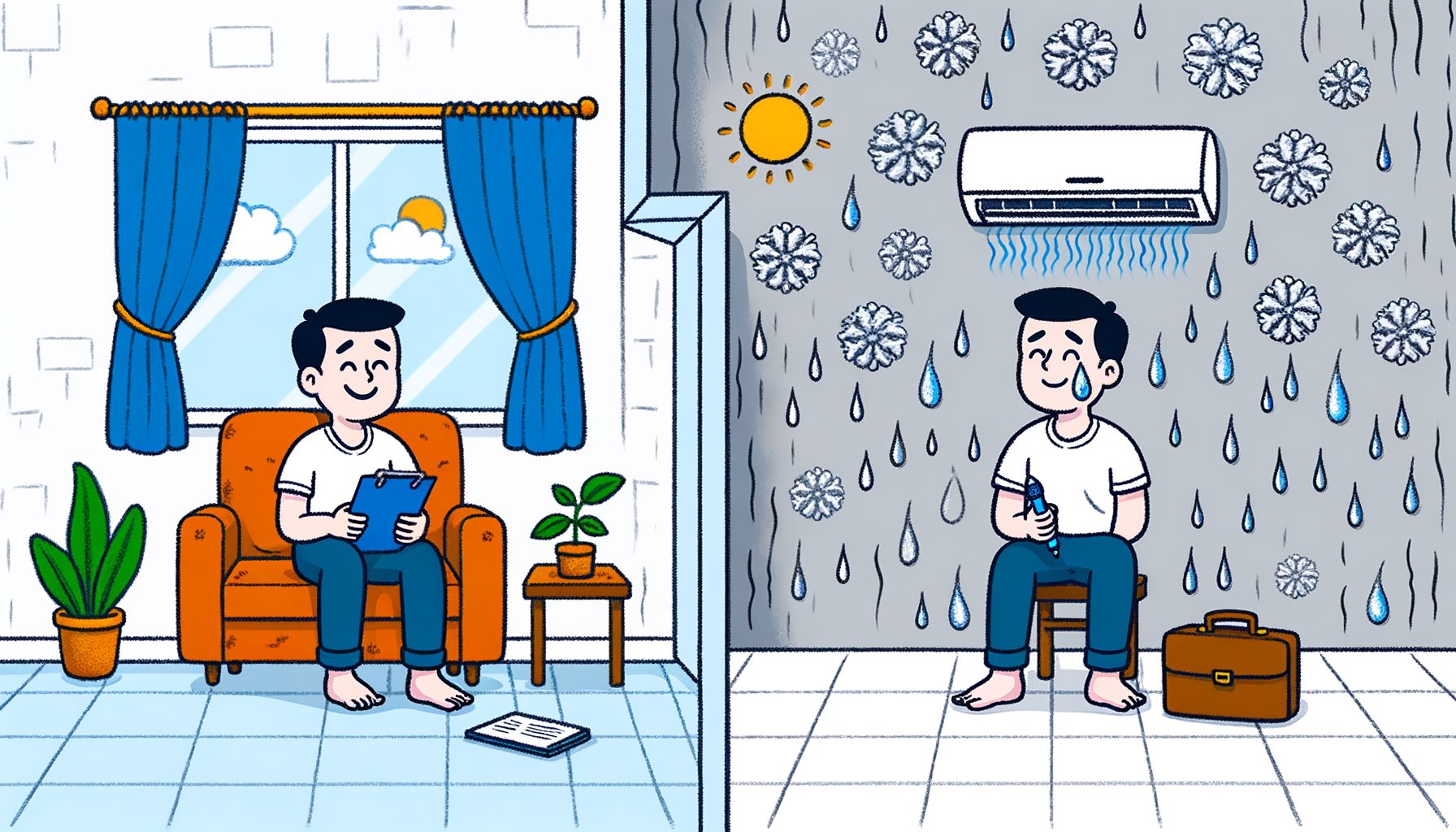
Many people turn on air conditioning to feel cooler—but forget how humidity changes the entire experience. If the air is too dry, your throat, eyes, and skin can sting. If it is too damp, rooms feel sticky, allergies flare, and mold thrives. In the pages ahead, you will see how air conditioning and humidity interact, why that pairing matters for health, and the steps that create a balance between comfort, energy savings, and well-being. By the end, you will know how to set up your space so it feels good and supports better sleep, breathing, and daily focus.
Why Temperature Alone Misleads: The Real Role of Humidity in Air-Conditioned Spaces
The trap many people fall into is staring only at the thermostat. You see 22°C (72°F) and assume comfort—but your body senses temperature and humidity together. A muggy 26°C can feel hotter than a dry 28°C, and cold, dry AC air can feel “sharp” or irritating even at a moderate temperature. The missing piece is relative humidity (RH): how much water vapor air holds compared with the maximum it could hold at that temperature. Warmer air can hold more moisture; cooler air can hold less. As indoor air is cooled by AC, moisture is condensed on the evaporator coil and humidity drops. Sounds great—until levels drift outside a healthy range.
Most building and health guidelines point to a “sweet spot” of roughly 40% to 60% RH indoors. In that range, air usually feels comfortable, skin and eyes are less irritated, and many germs and allergens are less active. When RH slips below 30–35%, the air becomes very dry and can irritate airways and skin. Once RH rises above 60%, the air begins to feel clammy; dust mites and mold find it easier to grow, and some people notice more congestion and fatigue. No wonder identical temperatures can feel completely different depending on humidity.
Air conditioning and humidity interact differently by climate and system design. In humid regions, an AC unit may run long enough to remove moisture, but an oversized system can cool so quickly that it fails to dehumidify, leaving the room cold and damp. In dry or tightly sealed spaces, continuous cooling can push RH too low, especially in small bedrooms or home offices with little fresh air. Fan speed and cycle length play a role too: slower fan speeds and longer cycles tend to remove more moisture, while rapid cycling prioritizes temperature drop without adequate dehumidification. What’s interesting too: once you understand these basics, it becomes easier to diagnose why a room feels “off” even when the thermostat looks perfect.
How Indoor Humidity Affects Health: Skin, Breathing, Sleep, and Germs
Humidity is not just about comfort—it shapes respiratory health, sleep quality, and even infection risk. Very low humidity (often under 35%) can dry out the protective mucus layer in your nose and throat, making it harder for your body to trap and clear particles. Many people report sore throats in the morning, nosebleeds, or a persistent tickle cough when sleeping in dry, air-conditioned rooms. Dry eyes and contact lens discomfort are common, especially with screen time. Skin can feel tight, itchy, or flaky because moisture evaporates faster from the surface when the air is dry.
On the other end, high humidity (above about 60%) creates a friendlier environment for dust mites and mold. Both are common triggers for allergies and asthma. If congestion, wheezing, or a musty smell shows up after running AC in a humid climate, excess moisture may be the culprit. Rooms with poor ventilation—bathrooms, basements, or closets—are at higher risk. High humidity also makes thermoregulation harder; sweat does not evaporate efficiently, so your heart works harder to cool you down. Result: fatigue and poor sleep, even when the thermostat reads a reasonable temperature.
Humidity also interacts with viruses and bacteria in complex ways. Research indicates that some respiratory viruses survive and transmit more easily in very dry air, where aerosols can remain airborne longer and your airways are more vulnerable. By contrast, very high humidity can increase particle deposition on surfaces and introduce other hygiene concerns. Many indoor air experts recommend aiming for 40–60% RH as a practical middle ground where people tend to feel better and certain pathogens are less stable. Good humidity control is not a cure-all, but it can reduce irritation, improve sleep comfort, and support your body’s natural defenses.
Finally, humidity influences cognitive performance. Stuffy, humid rooms often feel “foggy,” while extremely dry air can cause headaches and distraction. If you work or study in AC for long hours, keeping RH in a healthy range can noticeably improve focus and energy—especially during long afternoons or late-night sessions.
Practical Ways to Balance AC and Humidity: Settings, Tools, and Daily Habits
Good news: a full HVAC overhaul is not required to improve humidity. Start by measuring it. A simple digital hygrometer is inexpensive and shows real-time RH in each room. Aim for 40–60% RH. If the reading falls outside that range, use the steps below to bring it back into balance.
Optimize your AC settings. In humid climates, set a moderate temperature (24–26°C or 75–78°F) and a lower fan speed if your unit allows; air spends longer over the cooling coil and more moisture is removed. If your AC includes a “dry” or “dehumidify” mode, try it during muggy hours. In very dry environments, avoid overcooling; each degree warmer saves energy and preserves moisture. As a rule of thumb, every 1°C (about 2°F) increase can reduce cooling energy by around 3–5%, while helping prevent uncomfortable dryness.
Use the right equipment. If RH stays above 60% in certain rooms, a standalone dehumidifier can help, especially in basements or coastal areas. If RH drops below 35%, consider a portable humidifier in bedrooms or work areas. Clean water should be used and routine maintenance followed to prevent microbial growth. Keep AC filters clean (check monthly, replace every 1–3 months depending on use). A higher-quality filter (MERV 8–13, depending on your system) improves indoor air quality, and a clean evaporator coil and drain line keep dehumidification efficient.
Ventilation matters. Use kitchen and bathroom exhaust fans during cooking and showers. Avoid drying laundry indoors without ventilation. If windows can be opened safely and outdoor humidity is favorable, short ventilation bursts can reset indoor air quality. In tightly sealed homes or offices, energy recovery ventilators (ERVs) or heat recovery ventilators (HRVs) exchange stale indoor air with fresh outdoor air while moderating humidity and energy loss.
Well, here it is—a quick guide to expected effects and actions by humidity level:
| Relative Humidity (RH) | What You Might Notice | Suggested Actions |
|---|---|---|
| Below 30–35% | Dry throat, itchy skin, static shocks, morning cough | Raise the setpoint slightly; use a humidifier; shorten AC cycles; add plants for a minor effect; hydrate |
| 40–60% | Comfort sweet spot for most people | Maintain current settings; keep filters clean; monitor with a hygrometer |
| Above 60–65% | Sticky air, musty odors, foggy windows, allergy flare-ups | Use “dry” mode or lower fan speed; run a dehumidifier; use exhaust fans; check for leaks and clean the AC drain line |
Watch for warning signs that your AC and humidity are out of balance: condensation on windows, a persistent musty smell, visible mold on walls or around vents, or waking up with a dry nose and sore throat. Respond quickly. Small tweaks—running bathroom fans longer after showers, sealing air leaks, or changing a clogged filter—often solve the problem without major expense. For renters, portable devices and simple habits (door gaps for airflow, timed fan use, localized dehumidification or humidification) can deliver big improvements with minimal setup.
For deeper guidance on indoor air quality and moisture, explore resources from the EPA and CDC: start with the EPA’s indoor air hub and CDC’s dampness and mold pages for practical, science-based tips.
Special Considerations: Kids, Seniors, and People with Allergies or Asthma
Everyone benefits from balanced humidity, but some groups are more sensitive to extremes. Children have developing airways and often sleep with mouths open, which can amplify the effects of dry air—sore throats, nighttime coughing, and restless sleep. Keeping bedroom RH around 40–50% and avoiding very cold AC blasts can reduce morning irritation. If you use a humidifier in a nursery or child’s room, thorough and frequent cleaning is essential; dirty tanks can aerosolize microbes.
Older adults may experience dry skin, eye irritation, and dehydration more quickly in low humidity. Seniors with cardiovascular or respiratory conditions can feel increased strain in hot, humid environments as the body struggles to cool through sweat evaporation. Gentle steps help: moderate temperature settings, dehumidifier use in damp seasons, and steady hydration. Rooms that feel cool but clammy may benefit more from dehumidification than from extra cooling.
For people with allergies or asthma, humidity management is a primary line of defense. Dust mites thrive above roughly 50–60% RH, and mold growth accelerates with dampness and poor ventilation. Keep RH under 50–55% in bedrooms, wash bedding regularly in hot water, and use high-quality AC filters. If wheezing increases after running AC, check filter condition, look for visible mold on vents or around windows, and consider professional maintenance to clean coils and drains.
Travelers and hotel guests can apply these principles, too. If a room feels muggy, set the AC to dry mode if available, run the bathroom fan, and avoid very low temperatures that promote condensation. If the air feels too dry, raise the setpoint a degree or two and let a damp towel dry indoors for a small, temporary boost of moisture (use sparingly and only if the room shows no signs of dampness). For dorms, co-working spaces, or shared apartments, a simple desk hygrometer plus consistent habits—like running exhaust fans and keeping windows closed during peak humidity hours—can make shared spaces healthier and more comfortable for everyone.
Quick Q&A: Air Conditioning, Humidity, and Health
Q: What is the best indoor humidity range?
A: For most people, 40–60% RH balances comfort, respiratory health, and allergen control. Bedrooms often feel best near 40–50%.
Q: Does air conditioning dehumidify the air?
A: Yes. Most AC systems remove moisture as they cool, but oversized units or high fan speeds can cool quickly without removing enough moisture, leaving air cool yet damp.
Q: How do I know if my air is too dry?
A: Common signs include a dry or sore throat, static shocks, dry eyes, cracked lips, and a morning cough. A hygrometer reading below about 35% RH confirms dryness.
Q: Should I get a dehumidifier or a humidifier?
A: If RH is consistently above 60%, get a dehumidifier. If it is below 35%, consider a humidifier. Check with a hygrometer before buying.
Conclusion: Bring Comfort and Health Into Balance—Starting Today
The big picture is simple: temperature alone cannot guarantee comfort or health. Air conditioning and humidity work together to shape how your body feels, sleeps, and breathes. When RH drops too low, airways and skin dry out; when it rises too high, allergens and mold gain ground and rooms feel heavy. The sweet spot—about 40–60% RH—reduces irritation, supports better sleep, and helps create a cleaner indoor environment. With a few simple tools and habits, you can put this knowledge into action quickly and affordably.
Your action plan can start right now. First, measure humidity with a basic hygrometer in the rooms where you spend the most time—bedroom, living room, and workspace. Then this: adjust your AC settings thoughtfully—try a moderate temperature (24–26°C or 75–78°F), slow the fan if possible to improve dehumidification, and use dry mode in muggy conditions. If the air still feels sticky, add a dehumidifier; if your throat feels raw in the morning, raise the setpoint and consider a humidifier for nighttime comfort. Next, keep the system healthy: clean or replace filters regularly, run exhaust fans during showers and cooking, and fix any leaks or clogged drains. These steps protect your lungs, conserve energy, and keep your space feeling fresh.
Share what you learn. Many friends, family members, and coworkers are struggling with fatigue, headaches, or allergies without realizing humidity is part of the problem. Invite them to check their rooms, compare readings, and swap tips. If you manage a home or office, consider a seasonal check-in: measure RH, review filter status, and adjust settings before the hottest months. Small, consistent actions add up to a healthier life indoors.
Start today: check the humidity in your bedroom tonight and make one change—adjust a setting, run a fan, or clean a filter. See how you feel tomorrow morning. Comfort is not a mystery; it is a system you can tune. Ready to dial in your perfect balance?
Helpful resources and references:
– EPA: Learn about Indoor Air Quality – https://www.epa.gov/indoor-air-quality-iaq
– CDC: Facts about Dampness and Mold – https://www.cdc.gov/mold/dampness_facts.htm
– ASHRAE Standard 55: Thermal Environmental Conditions for Human Occupancy – https://www.ashrae.org/technical-resources/standards-and-guidelines/standards-addenda/standard-55
– Annual Review of Virology: Seasonality and Respiratory Virus Transmission – https://www.annualreviews.org/doi/10.1146/annurev-virology-012420-022445