
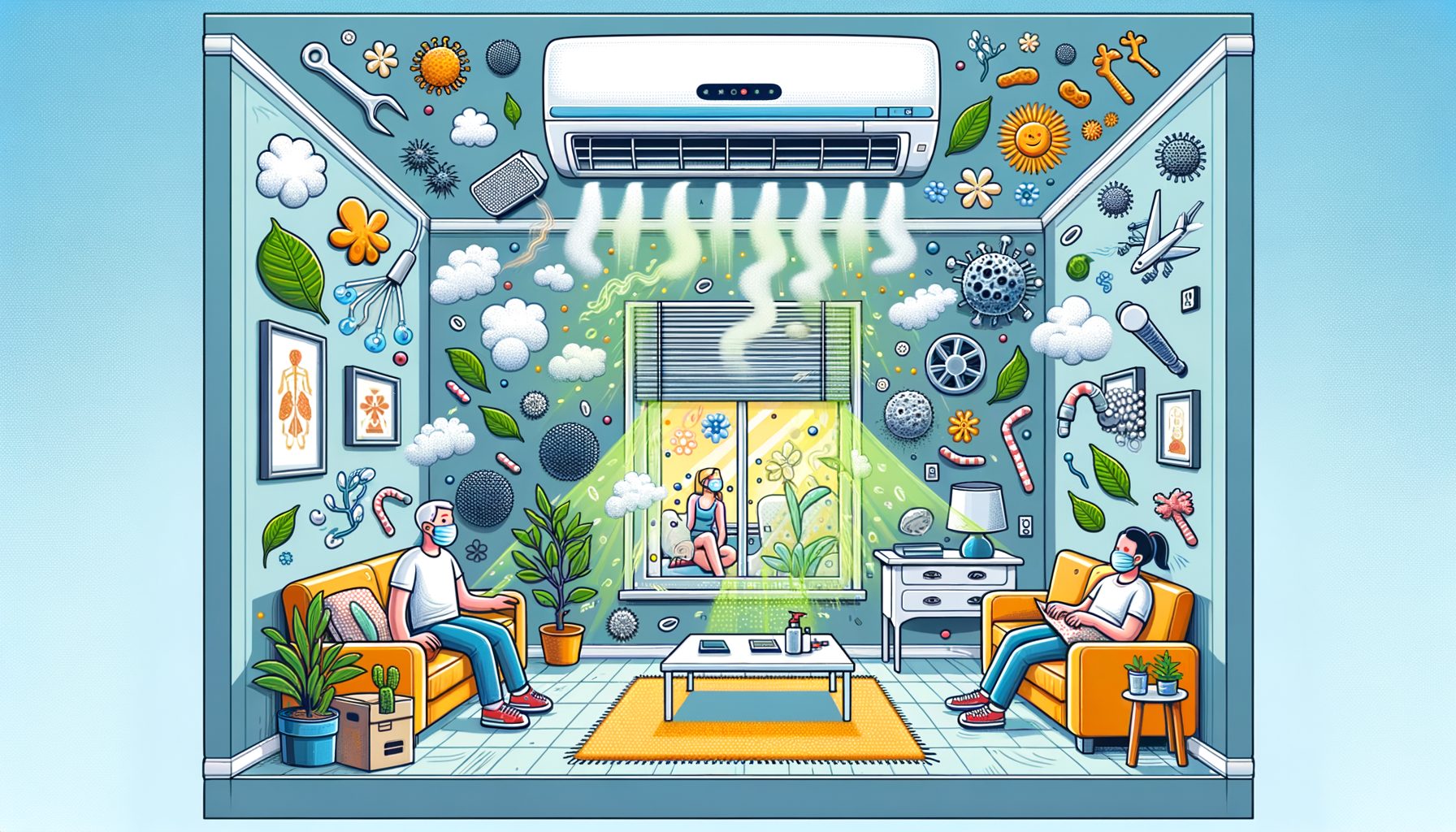
Wake up sneezing, rubbing your eyes, or feeling stuffy even inside? You’re not alone. Homes and offices often trap dust mites, pet dander, pollen, and mold spores without anyone noticing. Good news: modern cooling systems do more than keep you comfortable. Wondering “How Air Conditioning Reduces Indoor Allergens for Allergy Relief”? The guide below breaks down the science, the key settings, and the small upgrades that move the needle—so you can breathe easier without turning your routine upside down.
Why Indoor Allergens Spike—and How AC Interrupts the Cycle
For allergy sufferers, the problem indoors isn’t only exposure—it’s how concentrated and persistent allergens become. In closed rooms, tiny particles such as pet dander and dust mite droppings settle into carpets, bedding, and sofas, then shoot back into the air whenever you sit, walk, or make the bed. Pollen rides in on clothing or through open windows and can linger for days. Mold spores flourish when humidity runs high, especially in bathrooms, kitchens, and around air-conditioning coils and drain pans that aren’t maintained. Without a plan to capture particles and control moisture, the cycle continues: more buildup, more irritation.
Air conditioning makes a real dent when three things are done well: filtering, circulating, and dehumidifying. First comes filtration—air passes through a return grille or intake, and the right filter rating (more on MERV and HEPA below) can capture a substantial share of common allergens before they re-enter the room. Then this: circulation. The more air pushed through that filter, the more particles get trapped. Finally, moisture control matters a lot. Dust mites and many molds prefer humid air; keeping relative humidity in the 40–50% range makes survival tougher for them and reduces allergen sources at the root.
Comfort improves as a bonus. When humidity is managed, sweat evaporates faster and spaces feel cooler even at a slightly higher thermostat set point—efficiency and better air quality can go hand in hand. On the other hand, neglected AC can backfire. A flimsy or clogged filter lets particles slip through; dirty coils or wet drain pans can host mold; and duct leaks may draw dusty attic or crawlspace air into living areas. The takeaway is clear: AC can be a powerful allergy tool, but only when it’s set up and cared for with indoor air quality in mind.
Filters, Ratings, and Room Purifiers: Choosing the Right Gear
Not every filter performs equally well. The headline number for central systems is MERV—Minimum Efficiency Reporting Value—ranging from 1 to 16, with higher numbers catching smaller particles. For allergy reduction, many pros point to MERV 13 if your HVAC blower can handle it without excessive pressure drop. MERV 13 filters capture a significant fraction of particles in the 0.3–1 micron range—covering many bacteria and finer dander—while also snagging larger pollen and dust mite fragments. If your system struggles with MERV 13, MERV 11 still helps; consider a professional evaluation to see whether a higher-efficiency media cabinet or an upgraded blower is feasible.
HEPA (High Efficiency Particulate Air) goes further, capturing 99.97% of 0.3-micron particles. Most existing residential central systems aren’t designed for in-duct HEPA because of airflow resistance, but standalone HEPA room purifiers pair extremely well with AC. Look at CADR (Clean Air Delivery Rate) when you shop. What’s interesting too: a simple rule of thumb is to pick a purifier with a CADR roughly two-thirds of your room’s square footage (or follow AHAM guidance) to reach at least five air changes per hour for allergy relief. Whenever possible, let the purifier run continuously on low or auto in rooms you use most, especially bedrooms.
Be cautious with devices that produce ozone or rely solely on ionization without robust filtration; ozone can irritate lungs and isn’t recommended in occupied spaces. UV lamps can help keep coils cleaner by limiting biofilm growth, but a good filter is still essential. If you live with wildfire smoke or heavy urban pollution, the winning combo is often a MERV 13 central filter plus HEPA room purifiers in key spaces. Pay attention to fit, too: the filter should sit snugly with no gaps around the frame—bypass leakage can erase most of the filter’s potential.
| Allergen/Particle | Typical Size | Effective Control | AC Feature to Prioritize |
|---|---|---|---|
| Pollen | 10–100 μm | MERV 11–13 filtration, window/door management | High-quality in-duct filter; keep windows closed during high counts |
| Dust mite allergen | 10–40 μm (fragments can be smaller) | MERV 13 filtration; RH 40–50% | Dehumidification; steady circulation through filter |
| Pet dander | 1–10 μm | MERV 13 or HEPA room purifier | Upgraded filter; HEPA in bedrooms/living rooms |
| Mold spores | 3–40 μm | MERV 13 filtration; RH 40–50%; fix dampness | Drain pan maintenance; coil cleaning; humidity control |
| Fine smoke/PM2.5 | 0.1–2.5 μm | MERV 13 plus HEPA purifier | High-efficiency media; sealed ducts; room HEPA units |
Daily Settings, Maintenance, and Humidity: Small Habits, Big Gains
Start with humidity: aim for 40–50% relative humidity. Go much below 40% and the air can feel uncomfortably dry; climb above 50–60% and dust mites and mold multiply faster. In humid climates, use your AC’s dehumidification setting if available or add a standalone dehumidifier in basements or bathrooms. In dry climates or during winter, avoid turning your home into a desert—comfort and allergen control are the target.
Fan operation comes next. Filters only work when air moves through them. If your thermostat offers a circulate mode (say, 20–30 minutes each hour), that often balances filtration with energy use. Running the fan continuously can improve filtration but may resuspend settled dust if ducts are dirty and will add to energy costs. Try a circulate schedule, then adjust based on symptoms and your utility bill. Keep doors and windows closed during high pollen or smoke days; use a smart speaker or app to check outdoor air quality and pollen counts before airing out.
Maintenance makes or breaks results. Filters should be replaced on schedule—every 1–3 months for pleated filters is common, but check monthly during peak seasons and swap them sooner if loaded. Make sure the filter arrow faces the airflow direction. Condensate drain lines and pans need to be cleaned to prevent standing water where mold could grow. Evaporator coils and blowers should be inspected and cleaned by a technician as needed; a clean coil boosts both air quality and efficiency. Duct leaks deserve attention—seal obvious gaps with mastic or foil-backed tape (skip cloth “duct tape”). Around the house, vacuum and dust weekly with a HEPA vacuum, wash bedding hot, and use mattress/pillow encasements if dust mites trigger symptoms. These basics work in tandem with your AC, lowering the number of new allergens that ever make it into the air.
Proof That It Works: Evidence, Real-World Wins, and Common Myths
Research keeps pointing the same way: better filtration and humidity control cut airborne particles tied to allergies and asthma. MERV 13 in central systems has been associated with meaningful reductions in indoor fine particulate matter (PM2.5) compared with lower-rated filters, particularly when combined with duct sealing and regular operation. HEPA room purifiers in bedrooms are repeatedly shown to reduce particle levels and may improve sleep and symptom scores for people sensitive to pet dander or traffic-related particles. Well, here it is on humidity: dust mite populations drop when indoor relative humidity sits near 50% or less, and mold growth slows when dampness is eliminated quickly.
Homes tell the same story. Families that upgrade from a thin fiberglass filter to a quality MERV 13 media, clean a grimy drain pan, and add a HEPA purifier in the bedroom often report fewer morning symptoms within weeks. Measurable improvements—like lower PM2.5 or fewer airborne particles on consumer monitors—can appear within days of making these changes. Results vary by building, climate, and habits, but consistency in maintenance and smart settings is what keeps gains steady.
Myths deserve a quick cleanup. “AC causes colds” isn’t accurate—colds come from viruses, not cool air. AC can dry air too much if misused, which may irritate nasal passages; that’s why the 40–50% RH target matters. Another misconception: “UV alone keeps air clean.” UV can be helpful for coils and specific microbes, but it won’t capture pet dander or pollen; it works best alongside high-efficiency filtration. Finally, “window or portable ACs don’t help allergies.” While they usually lack strong in-duct filters, pairing them with a HEPA room purifier and a simple prefilter on the unit’s intake can deliver meaningful benefits, especially when humidity is controlled.
FAQ: Fast Answers for Allergy Relief with AC
Q: Can I upgrade to a MERV 13 filter in any HVAC system?
A: Not always. Higher MERV filters increase airflow resistance. Check your system’s specs or consult a technician. If airflow drops too far, comfort and efficiency suffer; a media cabinet designed for MERV 13 often solves it.
Q: Do I still need a HEPA purifier if I have a good central filter?
A: Bedrooms and home offices benefit from targeted, high-rate cleaning. Many households use both—MERV 13 in-duct for whole-home reduction, plus HEPA units where they spend the most time.
Q: What humidity level is best to reduce dust mites and mold?
A: Aim for 40–50% relative humidity. Use your AC’s dehumidification mode or add a dehumidifier in damp areas. Fix leaks and dry spills promptly.
Q: How often should I replace filters?
A: Inspect monthly during heavy-use seasons and replace every 1–3 months, or per the manufacturer’s guidance. Homes with pets, smoke exposure, or construction dust may need more frequent changes.
Q: Are ionizers or ozone generators a good idea?
A: Avoid ozone in occupied spaces; it can irritate lungs. Stick with proven methods: high-efficiency filtration, humidity control, and source reduction.
Conclusion: Clean, Cool, and Clear—Your Action Plan Starts Today
Here’s the simple path to easier breathing: capture allergens with the right filter, keep air moving through that filter, and hold humidity in the sweet spot so dust mites and mold can’t thrive. Strategic upgrades—MERV 13 media (where compatible), a HEPA purifier in key rooms, and diligent maintenance like coil cleaning, sealed ducts, and fresh filters—deliver outsized benefits for comfort and health. Pair those steps with smart habits such as checking outdoor pollen and pollution before opening windows, vacuuming with a HEPA machine, and washing bedding hot, and you’ll break the cycle of recirculating allergens that make mornings miserable.
Take action this week: check your current filter rating, set a monthly reminder to inspect it, and measure indoor humidity. If it sits above 50% regularly, adjust AC settings or add a dehumidifier. Consider a bedroom HEPA purifier for immediate relief where it matters most. If you’re unsure about your system’s capability, schedule a quick HVAC checkup and ask specifically about MERV 13 compatibility and duct sealing. Small, focused moves compound—each one lowers allergen load and amplifies the impact of the others.
Clean air isn’t a luxury; it’s a daily performance boost—better sleep, clearer focus, and more energy to do what you love. Start with one step, track how you feel, and build from there. What’s the first change you’ll make today: upgrading your filter, dialing in humidity, or adding a HEPA purifier? Breathe in, breathe out—you’ve got this, and your indoor air can too.
Helpful Resources
– U.S. EPA Indoor Air Quality: https://www.epa.gov/indoor-air-quality-iaq
– ASHRAE Filtration and Disinfection Guidance: https://www.ashrae.org/technical-resources/filtration-and-disinfection
– CDC: Asthma Triggers and Indoor Allergen Basics: https://www.cdc.gov/asthma/triggers.html
– NIOSH on Dampness and Mold: https://www.cdc.gov/niosh/topics/indoorenv/mold.html
– AHAM CADR Information for Room Air Cleaners: https://www.ahamdir.com/Room-Air-Cleaners/
– AAAAI: Indoor Allergens Overview: https://www.aaaai.org/tools-for-the-public/conditions-library/allergies/indoor-allergens
Sources
– ASHRAE Standard 52.2 and public guidance on MERV ratings and filtration effectiveness.
– U.S. EPA: Guide to Air Cleaners in the Home; indoor humidity and pollutant reduction recommendations.
– CDC/NIOSH: Dampness and mold resources; dust mite and moisture relationships.
– AHAM: Clean Air Delivery Rate (CADR) methodology for portable purifiers.
– Peer-reviewed studies on HEPA room purifiers and reductions in indoor particulate matter (PM2.5) and allergy symptoms (see PubMed and Harvard Chan School summaries).