
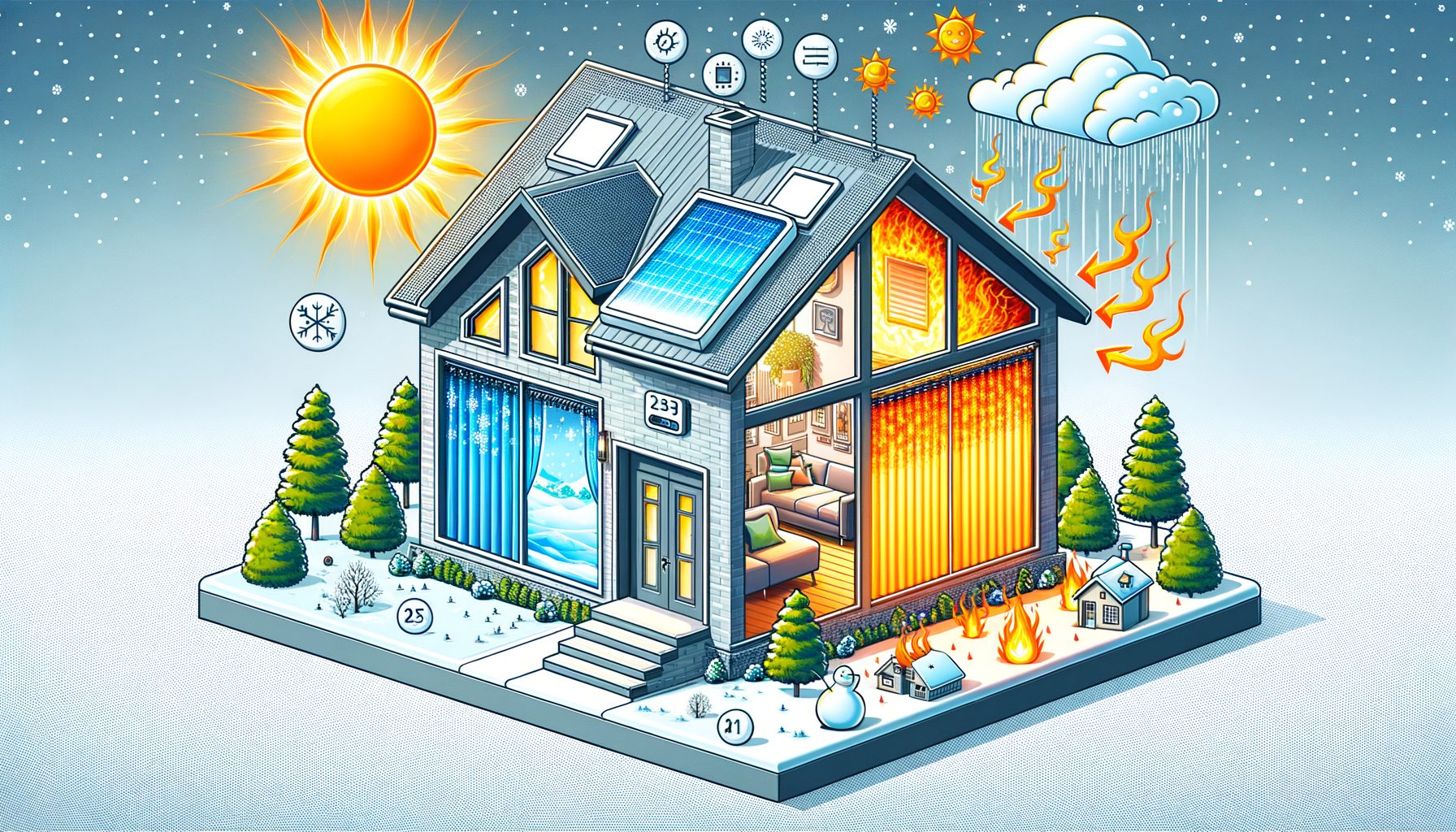
Smart curtains and blinds rank among the quickest ways to cut home heat load and save energy without a renovation. If summer cooling bills spike or rooms feel like greenhouses at noon, your windows are likely the culprit. In cooling season, a large share of that load is simply sunlight becoming indoor heat. In the guide below, you’ll learn how to use smart window coverings to block unwanted solar gain, automate comfort, and reduce HVAC runtime—so you spend less, stay cooler, and live smarter.
The hidden problem: window heat load is draining your comfort and your wallet
Most homes lose and gain more energy through windows than any other surface of similar size. The U.S. Department of Energy (DOE) notes that in cooling season, a significant portion of sunlight striking standard double-pane windows becomes indoor heat. If you’ve ever felt a sunbeam turn your living room into a sauna, that’s solar heat gain at work—also known as a heat load your air conditioner must fight every minute the sun is up. In many regions, windows can drive 25–30% of heating and cooling energy use, and in warm climates that number skews heavily toward cooling.
Why this matters now: global cooling demand is rising, energy prices are volatile, and grids are stressed during heat waves. The International Energy Agency (IEA) warns that air conditioning load is one of the fastest-growing electricity uses worldwide. For you, that translates into higher bills and more discomfort during peak hours. Even efficient HVAC systems cannot erase the physics of direct solar heating through glass.
Fortunately, sunlight is predictable. That means you can control it. Heat gain is typically highest on east-facing windows in the morning and west-facing windows in the late afternoon, with south-facing windows receiving strong midday sun in many latitudes. If your shades stay open during those hours, your AC fights an uphill battle. The good news: properly chosen and automated curtains and blinds can cut that solar spike dramatically—often enough to reduce peak indoor temperatures, compressor starts, and total kWh. Instead of blasting AC, you can block heat at the source.
Beyond comfort and cost, there’s a health and productivity angle: indoor spaces with stable temperatures and controlled glare reduce fatigue, headaches, and distractions. If you work from home, helping your window do its job is one of the simplest performance upgrades you can make. And unlike major retrofits, smart shades install quickly and scale room by room.
The science and the tech: how smart curtains and blinds actually save energy
Window heat transfer happens via conduction (through glass), convection (air movement), and radiation (sunlight turning to heat indoors). Smart window coverings target the most manageable part of that puzzle: radiation. They lower the Solar Heat Gain Coefficient (SHGC)—a measure of how much solar energy passes through—and can add a small insulating air layer that improves effective R-value.
Well, here it is—how the pieces fit together:
- Blocking and reflecting solar radiation: Light-colored or reflective blinds and shades bounce a large fraction of sunlight back out. Blackout curtains and multi-layer drapes absorb and block light before it becomes room heat. Cellular (honeycomb) shades trap air pockets that reduce both heat loss in winter and heat gain in summer.
- Targeted timing: With motors and schedules, shades close precisely during peak sun and open when solar angles are low. Timing often matters more than people expect; even two hours of afternoon closure on a west-facing window can noticeably reduce evening cooling load.
- Sensors and geofencing: Smart systems use temperature, light, and occupancy data. For example, if indoor temp exceeds 26°C (78°F) and outdoor sun is intense, shades close automatically. When you leave home, they can default to an energy-saving “closed” state regardless of manual habits.
- Integration with HVAC and smart homes: Platforms like Matter, Thread, HomeKit, Google Home, and Alexa let shades coordinate with thermostats and ceiling fans. A scene might open shades in the morning for daylight, close before afternoon peak, and nudge the thermostat a bit higher without sacrificing comfort.
What does this mean in real houses? In studies of automated shading, researchers have observed reductions in peak cooling power and daily energy use, especially in homes with large south or west exposures. DOE guidance on window attachments indicates that insulating cellular shades can reduce heat loss through windows significantly in winter and lower unwanted heat gain in summer; reflective or light-colored coverings cut radiant load before your AC must remove it. If you live in a hot, sunny climate or have big windows, the impact can be substantial.
What’s interesting too: daylighting is part of the win. By opening shades during low-heat hours, you reduce artificial lighting, which also creates heat. Smart shades optimize both light and thermal comfort without constant manual adjustment. The result: lower peak indoor temperatures, fewer AC compressor cycles, and a smoother, more efficient home.
What to buy: match smart curtains and blinds to your climate, windows, and style
Choosing the right product starts with your climate and window orientation. The goal is simple: lower SHGC when the sun is harsh, add insulation when it is cold, and automate the schedule. Use the pointers below to narrow options quickly.
- Hot or sunny climates: Prioritize cellular (honeycomb) shades with high reflectance, light-colored roller shades, or Venetian blinds with reflective slats. Look for low SHGC window attachment ratings. Exterior shades or awnings (where allowed) can be even more effective since they stop heat before it reaches the glass.
- Mixed or four-season climates: Dual-purpose cellular shades (top-down/bottom-up) provide summer reflection and winter insulation. Layering—sheer for daylight, blackout for heat blocking—offers flexibility year-round.
- Cold climates: Insulating drapes with thermal liners and snug side channels limit convective drafts at night. Pair with smart rods to ensure they close at sunset and reopen for passive solar gain by mid-morning.
- Window orientation: East-facing windows need morning automation; west-facing need strong afternoon protection; south-facing often benefit from midday closure, especially in summer. North-facing windows typically need less shading for cooling but can use insulation in winter.
Key specs and certifications:
- SHGC and visible transmittance (VT): Lower SHGC means less solar heat enters. Balance with VT if you want daylight without glare.
- Insulation (effective R-value): Cellular shades with deeper cells and side tracks increase insulating performance.
- Smart compatibility: Look for Matter/Thread or established ecosystems (HomeKit, Google, Alexa). Battery-powered motors are renter-friendly; wired motors suit new builds.
- Safety and durability: Cordless designs improve child and pet safety. UV-resistant fabrics keep their color and performance longer.
Real-world blend of performance and style: many homeowners use a two-layer setup—sheer or light-diffusing roller shades for daytime privacy and glare control, paired with blackout or cellular shades for afternoon heat defense and night insulation. If you prefer blinds, choose light-colored, reflective slats and set a summer angle that reflects sun upward toward the ceiling rather than straight onto floors and furniture.
Budget tip: start with your hottest room or largest west-facing window. Then this—expand as savings and comfort improve. If you rent, stick with no-drill brackets, battery motors, and removable side channels.
For product performance data and standardized ratings, check resources like the Attachments Energy Rating Council (AERC) and DOE Energy Saver pages. They explain how different fabrics and designs affect heat and light transmission and can help you compare brands objectively.
Setup and automation that deliver savings: schedules, sensors, and ROI
Installation is only half the story; automation is where smart curtains and blinds earn their stripes. Build routines that act ahead of the sun, not after. Savings follow.
- Map the sun: For each priority window, note peak sun times. East windows close 8–10 a.m., south windows 11 a.m.–2 p.m., west windows 3–7 p.m. Adjust for your latitude and seasonal changes.
- Build schedules: Create weekday and weekend routines. Example: open at sunrise for daylight; auto-close before the hottest hours; reopen in the evening for views and ventilation if outdoor air is cooler.
- Use triggers: Add light (lux) and temperature sensors to override schedules during cloudy days or heat waves. Rule of thumb: if indoor temp rises above your comfort setpoint and solar is strong, close shades immediately.
- Coordinate with HVAC: Pair with a smart thermostat. When shades close for peak sun, raise the cooling setpoint by 1–2°C (2–4°F). The room should feel similar but use fewer kWh.
- Measure results: Track HVAC runtime and indoor temperature before and after. Many thermostats and plugs report energy. You should see fewer afternoon compressor cycles and a lower daily kWh, especially on sunny days.
Costs and savings vary by home, climate, and product. The table below provides typical ranges gathered from manufacturer data, public guidance, and field experience to help set expectations. Your results may differ, but they give a useful starting point.
| Window Treatment | Typical Cooling Load Reduction | Installed Cost (per window) | Annual Energy Savings (typical) | Simple Payback |
|---|---|---|---|---|
| Light-colored roller shade (manual) | 5–15% | $40–$150 | $10–$30 | 2–6 years |
| Cellular (honeycomb) shade, smart motor | 10–25% (plus winter insulation) | $200–$600 | $25–$80 | 3–8 years |
| Reflective Venetian blinds, smart tilt | 10–20% | $150–$400 | $20–$60 | 3–7 years |
| Exterior shade/awning (motorized) | 15–35% (high on west) | $400–$1,200 | $40–$120 | 3–9 years |
How to improve ROI:
- Prioritize big, sunny windows first; west-facing panes usually deliver the fastest payback.
- Add side channels or tighter mounts to reduce light gaps and convective drafts.
- Combine with low-E window film for additional summer reflection if allowed by code and warranty.
- Leverage rebates: some utilities and local programs incentivize window attachments or smart home devices.
Even modest improvements add up. A 10–20% reduction in cooling energy during sunny months can translate to noticeable bill drops and more comfortable afternoons. The automation piece ensures the savings happen every day, not just on days you remember to close the shades.
Quick Q&A: common questions about smart curtains and blinds
Do I need a hub? Not always. Many new motors support Matter/Thread or Bluetooth/Wi‑Fi and can work hub-free. That said, a dedicated hub can improve reliability, extend battery life, and enable richer automations.
Will this help in winter? Yes. Cellular shades and insulated drapes reduce heat loss at night. Program them to close at sunset and open when sun can provide passive warming.
What if I rent? Use no-drill brackets, battery-powered motors, and removable side tracks. Everything can come with you when you move.
Blackout or light-filtering? For maximum cooling savings, blackout or reflective fabrics work best during peak sun. Use light-filtering sheers for daytime privacy and glare control when heat is not extreme.
How do I know a product’s performance? Look for AERC ratings, fabric SHGC data, and compatibility with your smart platform. Reputable brands publish specs and test results.
Conclusion: start with the sunniest window, automate the rest, and enjoy lower bills
Smart curtains and blinds cut home heat load at the source by blocking and reflecting solar energy before it becomes indoor heat. We covered why windows drive cooling costs, how shading works with physics and automation, how to choose the right products for your climate and orientation, and how to set schedules and sensors that lock in daily savings. With simple steps—identify peak sun windows, pick low-SHGC coverings, and automate closure during hot hours—you can reduce afternoon temperature spikes, trim HVAC runtime, and feel more comfortable without cranking the AC.
The best part is momentum: start with your hottest, west-facing window and you will feel the difference in days, not months. Build routines that close shades ahead of the sun and reopen when it is safe. Coordinate with your thermostat to raise cooling setpoints a notch while maintaining comfort. Use side channels or layered treatments to tighten performance. If you want extra gains, add low‑E film or exterior shading where codes and aesthetics allow. Keep an eye on energy dashboards to see the impact—seeing fewer compressor cycles is a great motivator.
Ready to take action? Pick one room that overheats, choose a smart cellular shade or reflective blind, set a simple schedule (close 3–7 p.m. on west windows), and track your HVAC runtime next week. If you see fewer cycles and a cooler evening, expand to the rest of the home. Explore rebates from your utility, check AERC ratings for products, and integrate your shades with Matter or your preferred smart platform for reliable automation.
Your home should work for you, not against you. With smart window coverings, you control the sun, not the other way around. Why not test one window and feel the difference this week? Small steps add up—and this one pays you back in comfort, savings, and a calmer summer. Which window will you start with today?
Sources and further reading: