
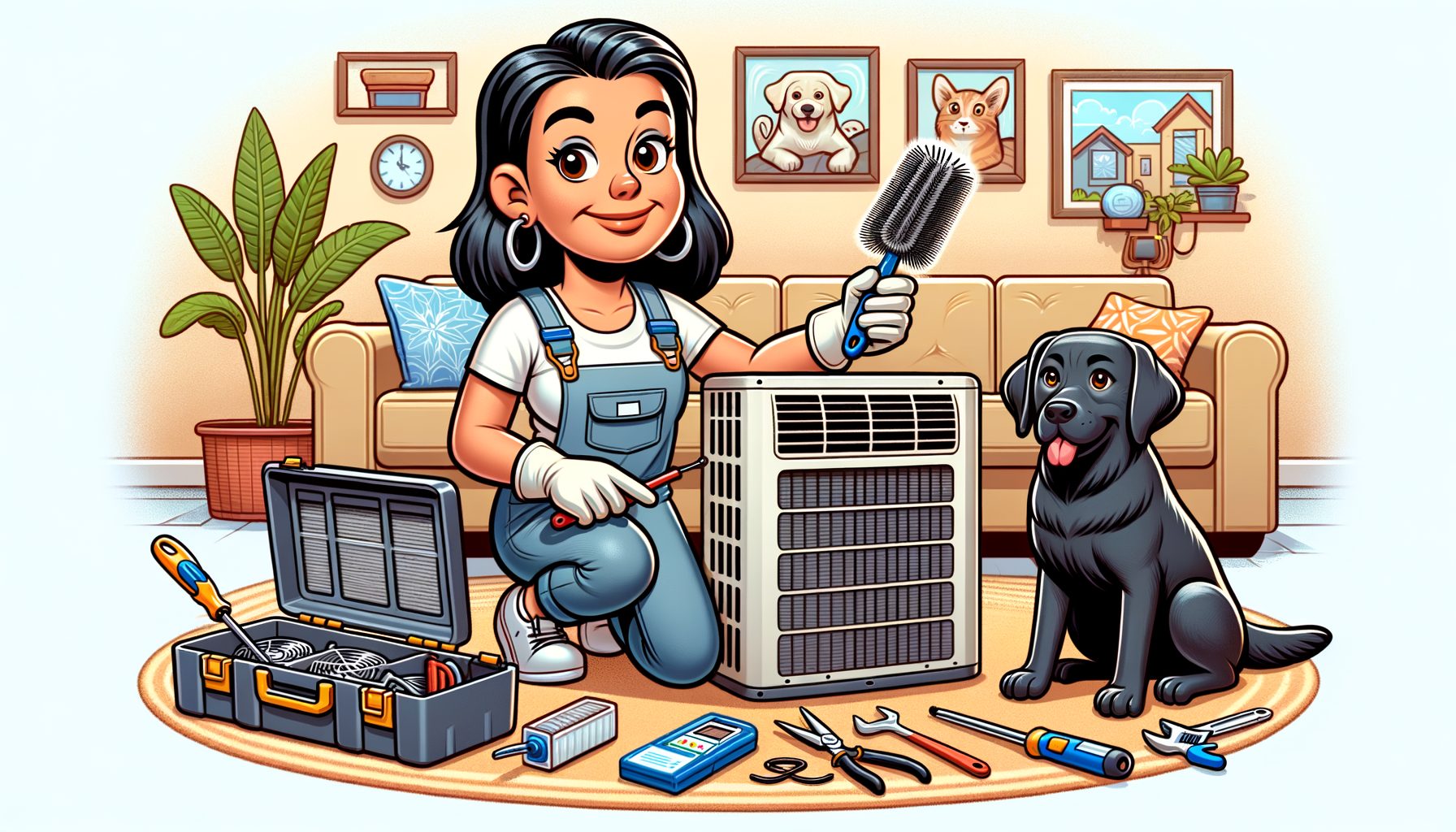
For pet owners, AC maintenance goes beyond comfort—it protects health, lowers energy use, and keeps your home fresh despite fur, dander, and everyday pet life. Wonder why the AC clogs faster, allergies spike, or bills creep up? Here is a guide to cleaner air that does not trade away the joy of living with your furry best friends.
Why Pets Challenge Your AC (And How That Affects Your Air)
Pets bring warmth and happiness, and they also bring hair, dander, tracked-in dust, and sometimes litter or bedding particles. Extra debris drifts into supply vents and return grilles, sticks to evaporator coils, and loads up filters faster than in a pet-free home. The result can be stale odors, more airborne allergens, and an air conditioner that runs harder and longer. The U.S. Department of Energy reports that replacing a clogged filter can cut energy use by about 5–15%, which means real savings for the same comfort level—a clear signal that routine care pays off.
From a health angle, pet dander and saliva proteins often trigger allergies. The Centers for Disease Control and Prevention lists pet dander among common asthma and allergy triggers. You cannot stop dander at the source, but you can limit how much circulates through your HVAC. The tools are straightforward: a properly sized filter, regular cleaning, targeted air purifiers, and humidity management. Use them consistently, and choose equipment that captures fine particles rather than only large hair.
Understanding particle size helps a lot. Pet-related particles commonly land in the fine range, which standard, low-rated filters barely touch. That is where MERV (Minimum Efficiency Reporting Value) matters. Higher MERV filters capture smaller particles—but only if your system can handle the added resistance. Many residential systems tolerate MERV 11–13; older systems may need MERV 8–11 to protect the blower. The goal is a balance between clean air and healthy airflow.
Well, here it is: a quick reference to use when selecting filters or planning upgrades.
| What’s in the Air | Typical Size Range | Helpful Filter Level | Notes |
| Visible hair, lint | 10 μm and larger | MERV 6–8 | Easy to catch; still clogs filters quickly in pet homes. |
| Pet dander, dust mite debris | ~1–10 μm | MERV 11–13 | Better for allergy control if your system supports it. |
| Fine particles (PM2.5), smoke | ≤2.5 μm | MERV 13 or HEPA purifier | HEPA room purifiers complement central filters. |
For deeper guidance on filters and air cleaners, see the U.S. EPA’s overview on home air cleaners at epa.gov, and DOE’s energy-saver tips at energy.gov. Those resources can help you choose upgrades with confidence.
The Pet-Proof Maintenance Plan: What to Do Monthly, Seasonally, and Yearly
Consistency beats complexity. A plan you will actually follow keeps air fresh and AC performance strong.
Monthly (or every 30–45 days in heavy-shedding seasons):
Step 1: Inspect and replace the HVAC filter. If you notice visible dust or hair, replace it. With multiple pets, expect to change filters more often than the packaging suggests. Aim for MERV 11–13 if airflow remains healthy; otherwise, use the highest MERV your blower and ductwork can handle. Check the owner’s manual, or ask a pro to measure static pressure before jumping to MERV 13.
Step 2: Vacuum return grilles and supply vents. Use a brush attachment to pull off fur and dust mats. A small habit like that prevents debris from getting pulled deeper into the system.
Step 3: Quick grooming and cleaning. Brush pets outside when possible and empty vacuum canisters outdoors. Grooming reduces the hair load that ends up in your filter and coils.
Seasonally (every 3 months):
Step 4: Clean the indoor unit’s area. The space around your air handler should be free of pet beds, litter boxes, and storage that can restrict airflow. Make sure the condensate drain line stays clear; a simple flush with a cup of vinegar can help prevent algae growth (follow the manufacturer’s guidance).
Step 5: Wash or wipe vent covers. Removing vent covers for a quick wash keeps surfaces from turning into odor reservoirs. Let them dry completely before reinstalling.
Step 6: Inspect the outdoor condenser. Clear leaves, grass, and pet toys from within two feet of the unit. Gently hose off fins from the outside in, keeping water pressure modest to avoid bending them.
Yearly (or twice a year in hot climates):
Step 7: Schedule professional service. A technician can clean the evaporator coil, measure refrigerant charge, check electrical connections, and verify static pressure. Ask them to confirm your filter choice and duct condition, and whether a higher MERV will be suitable.
Step 8: Consider duct inspection and sealing. Leaky ducts pull in dusty attic or crawlspace air and blow conditioned air into those spaces. Sealing and insulating ducts improves comfort and reduces dust. Learn more at energy.gov.
Then this: track your plan. Put reminders in your phone and set calendar events for filter changes, coil checks, and professional tune-ups. A few minutes now prevents headaches later—especially in peak summer or winter when you need your system most.
Upgrades That Actually Work: Filtration, Purifiers, Humidity, and Ventilation
Once routine maintenance is handled, smart upgrades can take indoor air quality to the next level in pet-friendly homes.
Better filtration at the air handler: If your return has room, a 4–5 inch deep media filter with MERV 11–13 often delivers great filtration with acceptable pressure drop. Deeper filters offer more surface area, so they resist clogging longer. Have a technician measure static pressure before and after the change; a quick test confirms that the system still breathes easily.
HEPA room purifiers: HEPA remains the gold standard for particle capture. Place purifiers where pets hang out—living rooms, bedrooms, and near litter areas. Choose a clean air delivery rate (CADR) that matches the room size. The Association of Home Appliance Manufacturers explains CADR and lists certified models at ahamdir.com. For best results, run purifiers on auto or medium around the clock. Replace filters on schedule, or rely on the onboard sensor.
Humidity control: Aim for 30–50% relative humidity. Inside that range, many allergens are less active and odors fade faster. In humid climates, a whole-house or portable dehumidifier helps. In arid climates, a humidifier may ease dryness that makes particles more irritating. The U.S. EPA has guidance on moisture control at epa.gov.
Ventilation: Bringing in outdoor air dilutes indoor pollutants and pet odors. If your climate and home allow, consider an energy or heat recovery ventilator (ERV/HRV) to provide fresh air without big energy penalties. Even simple routines—like opening windows when pollen counts are low and the weather is mild—help.
Optional UV for coils: Ultraviolet germicidal lights can help keep the evaporator coil cleaner by limiting biofilm growth. They are not a replacement for filtration or cleaning, but they can reduce musty odors from the coil. Learn what UV can and cannot do at epa.gov.
Smart controls and sensors: A smart thermostat can alert you to filter changes and track runtime spikes that hint at a clog. Low-cost sensors that estimate PM2.5, humidity, and temperature provide instant feedback on whether your changes are working. Place one near the main return and one in a bedroom to watch trends.
Troubleshooting: Fixing Odors, Dust, Hot Spots, and High Bills
If your home still feels off, use these common pet-related AC issues and solutions to connect the dots.
Persistent pet odor: First, replace the HVAC filter. Next, clean return grilles and wipe supply vents. Check the evaporator coil and drain pan; a dirty coil traps smells. If odors are strongest near litter boxes or pet bedding, position a HEPA purifier in that zone and use a carbon filter layer for odor adsorption. Ensure good ventilation during heavy cleaning sessions.
Dust everywhere despite frequent vacuuming: Verify your filter rating and change interval. If you are using MERV 8 and still seeing fine dust, consider stepping up to MERV 11 or adding a deep media cabinet. Inspect for duct leaks—leaky return ducts can drag dusty air from attics or crawlspaces. Seal and insulate as needed.
Allergy flares or scratchy throat: Aim for MERV 11–13 if your blower can handle it, add a HEPA purifier in the bedroom, and keep humidity in the 30–50% range. Wash pet bedding weekly in hot water and groom outside. If symptoms persist, review CDC information on triggers at cdc.gov and speak with a healthcare professional.
Hot or cold spots: Look for closed or blocked vents, especially where pet beds or furniture may obstruct airflow. Vacuum the return filter slot; gaps allow air to bypass the filter and reduce effectiveness. If one room is always uncomfortable, ask a pro to evaluate duct sizing and balancing.
Rising energy bills or short cycling: Dirty filters and coils force the system to work harder. Start with a new filter, clean around the indoor unit, and wash the outdoor condenser fins. If short cycling continues, a technician should inspect refrigerant charge, blower speed, and thermostat placement (avoid placing thermostats near sunny windows or areas where pets sleep against the wall and add heat).
When to call a professional: Ice on refrigerant lines, repeatedly tripped breakers, musty smells that do not fade after cleaning, or weak airflow from all vents suggest deeper issues. A licensed technician can test static pressure, refrigerant levels, motor amperage, and duct leakage—evidence-based checks that point to the true root cause.
Q&A: Quick Answers for Busy Pet Owners
How often should I change my AC filter if I have pets? In most pet homes, every 30–60 days works well. With multiple shedding pets or during peak allergy season, 30 days is safer. Inspect monthly and change the moment you notice visible dust, fur buildup, or airflow drop.
What MERV rating is best for pet dander? Many homes find MERV 11–13 balances capture and airflow. MERV 13 catches smaller particles, but it increases resistance. Ask a pro to measure static pressure; if it is within the blower’s limits, MERV 13 is a strong choice. If not, try a deeper (4–5 inch) MERV 11–12 media filter for similar capture with lower pressure drop. Background on filters is available in the U.S. EPA’s guide to home air cleaners at epa.gov.
Do HEPA purifiers help with pet smells? HEPA removes particles, which often carry odor compounds. For stronger odors, choose a purifier that includes an activated carbon stage. Place it near pet zones and let it run continuously on a quiet setting. Replace the carbon filter per the maker’s schedule, as odor media saturates faster than HEPA.
Is it safe to upgrade to MERV 13 in any system? Not always. Some older or small blower motors struggle with high-resistance filters, which can reduce airflow and even cause coil icing. The right approach is to test. A technician can check static pressure before and after installing a higher-MERV filter. If it is too high, switch to a deeper media cabinet or stay at MERV 11–12. Efficiency and clean air both matter.
Should I close vents in rooms my pets do not use? Generally, no. Closing vents can increase duct pressure, cause leaks at weak joints, and reduce overall system efficiency. If you want zoned comfort, ask about proper zoning or room-by-room solutions. For simple savings, keep vents open and ensure furniture and pet beds do not block them.
Conclusion: Breathe Easier With Your Pets
Here is the big picture: pets add fur, dander, and love—and with the right habits, your air conditioner can handle it. You now know why pet homes load filters faster, how better filtration and regular cleaning keep air fresh, which upgrades deliver the biggest wins (HEPA purifiers, deeper media filters, humidity control, and ventilation), and how to troubleshoot stubborn odors, dust, and hot spots without guesswork. None of it requires expensive overhauls; a practical plan and follow-through will do.
Start now. Check your filter, vacuum the returns, clear your outdoor unit, and place a HEPA purifier where your pets spend the most time. Set calendar reminders for monthly checks, seasonal cleanups, and an annual professional tune-up. If you are unsure about filter ratings or airflow, schedule a static pressure test and decide based on data. A few smart moves this week can mean cleaner air, fewer symptoms, and lower bills all year.
If this guide helped, put it into action today: choose a filter that matches your system, aim for 30–50% humidity, and find a purifier with the right CADR for your most-used room. What’s interesting too, sharing these steps with another pet parent battling fur and odors can spark useful comparisons. Clean air is a daily habit, not a one-time fix—and your pets will appreciate the calmer, fresher home as much as you do.
You do not have to pick between cuddles and clean air. With a simple plan and a few targeted upgrades, you can enjoy both—comfortably, affordably, and confidently. Ready for the first step right now: when is your next filter change scheduled?
Sources
U.S. Department of Energy. Maintaining Your Air Conditioner: Filter changes, outdoor unit care, and energy-saving maintenance. https://www.energy.gov/energysaver/maintaining-your-air-conditioner
U.S. Environmental Protection Agency. Guide to Air Cleaners in the Home: How filters and portable purifiers work, and what to consider. https://www.epa.gov/indoor-air-quality-iaq/guide-air-cleaners-home
U.S. Environmental Protection Agency. Improving Indoor Air Quality: Ventilation, source control, and air cleaning basics. https://www.epa.gov/indoor-air-quality-iaq/improving-indoor-air-quality
U.S. Environmental Protection Agency. Mold and Moisture: Managing humidity in homes. https://www.epa.gov/mold/mold-and-moisture
Centers for Disease Control and Prevention. Asthma Triggers: Overview of common indoor triggers, including pets. https://www.cdc.gov/asthma/triggers.html
Association of Home Appliance Manufacturers. Room Air Cleaners (CADR and certified models). https://www.ahamdir.com/room-air-cleaners/
U.S. Department of Energy. Duct Sealing: Why and how to seal leaky ducts. https://www.energy.gov/energysaver/air-sealing-your-home/duct-sealing
U.S. Environmental Protection Agency. UVGI Air Cleaners: What ultraviolet systems can and cannot do. https://www.epa.gov/indoor-air-quality-iaq/uvgi-air-cleaners